



How to choose an EPC turnkey solution for a gold ore processing plant?
The EPC general contracting solution for a gold ore processing plant is essentially about making a judgment:whom to entrust with tens of millions or even hundreds of millions in funds, so that the processing plant can be put into production on schedule, reach design capacity and grade, and stay within budget. The difficulty of this decision lies in the fact that the gold ore beneficiation process chain is long and ore properties vary greatly. The technical strength and project management capability of the EPC contractor directly determine whether the project becomes a "money-printing machine" or a "bottomless pit."
OrePartner has been deeply engaged in the mineral processing field for many years and has served various projects ranging from oxide ores to complex refractory gold ores. We understand deeply what owners most need to pay attention to when selecting an EPC solution. Below is an actionable selection framework from three levels: technical capability assessment, model selection, and contract review.
I. First Determine: Do You Actually Need EPC or EPCM?
The first step in choosing a solution is not comparing prices, but determining which model suits your project.
EPC (Engineering-Procurement-Construction General Contracting) is essentially about risk transfer. The contractor assumes full responsibility for design, equipment procurement, construction, commissioning, and production startup. The owner only needs to deal with one entity, pay by milestones, and after acceptance, "turn the key" to begin production. This model is suitable for owners with limited project management teams, who wish to lock in total investment, and whose project sites have poor infrastructure.
EPCM (Engineering-Procurement-Construction Management) is essentially about owner leadership. The contractor is responsible for design and management, while the owner directly signs contracts with equipment suppliers and construction parties. This model is suitable for large mining companies with mature project management teams. The owner has stronger control over cost and schedule, but the responsibility chain is dispersed, and coordination workload increases significantly.
OrePartner\'s practical recommendation: For most small and medium-sized gold mines and overseas projects, prioritize the EPC model. Process commissioning and achieving design capacity and grade at gold processing plants are the stages most prone to problems. Under the EPC model, the contractor has clear performance guarantee responsibilities, and the owner does not need to get caught in disputes with multiple suppliers after production startup. For large projects with an annual processing capacity of over one million tons, if the owner\'s team has engineering management capabilities, EPCM or a hybrid model can be considered.
II. Screening EPC Contractors: Conduct "Hardcore Due Diligence" Across Three Dimensions
After selecting the model, the next step is screening the contractor. Price is certainly important, but the following three dimensions are the key to project success or failure.
Dimension One: Technical Capability — Don\'t Look at "What They\'ve Done," Look at "How They Do It"
The technical capability of an EPC contractor is mainly reflected in ore testing research and process design. There is no "universal process" for gold ore beneficiation; the process routes for oxide ores and refractory ores may be completely different. A responsible contractor will definitely require the owner to provide representative ore samples before quoting and will only propose a solution after completing beneficiation tests.
OrePartner always adheres to one principle when serving clients: do tests first, then discuss solutions. Our testing system covers the complete chain from exploratory tests to continuous tests. For gold ores, the test types include non-toxic gold leaching tests, hard rock gold processing tests, gold gravity separation tests, gold flotation tests, gold cyanidation tests, sulfide gold ore beneficiation tests, oxide gold ore processing tests, complex refractory gold ore beneficiation and metallurgy tests, carbonaceous gold ore pretreatment tests, high-sulfur gold ore beneficiation tests, high-arsenic gold ore processing tests, etc..
For refractory gold ores containing arsenic, carbon, or copper, conventional cyanidation processes have low recovery rates and high costs, and pretreatment is necessary for economic recovery. OrePartner provides full-process solutions from process mineralogy research, pretreatment technologies (oxidative roasting, pressure oxidation, bio-oxidation, chemical oxidation), leaching processes, to environmental treatment. We can customize the most economically viable process route based on the occurrence state of gold in the ore (microfine encapsulated gold, solid solution gold, surface coating film gold, etc.) and the types of harmful elements.
Screening recommendation: Require candidate contractors to provide a beneficiation test report specific to your ore, rather than quoting solely based on "experience with similar ores." If the other party refuses to conduct tests or only provides a templated process solution, eliminate them directly.
Dimension Two: Equipment Matching Capability — The Final Hurdle for Implementing Technical Solutions
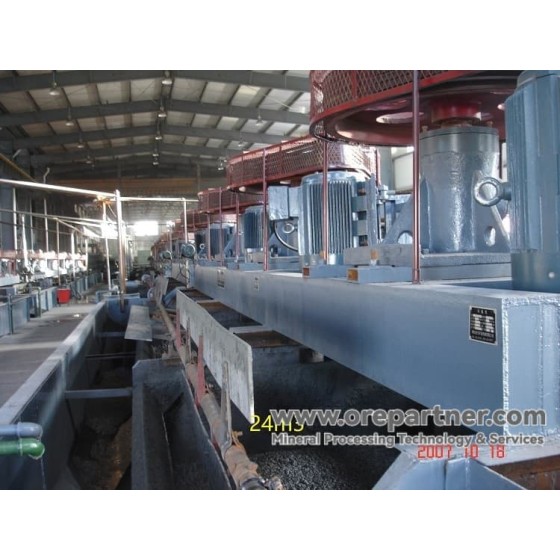
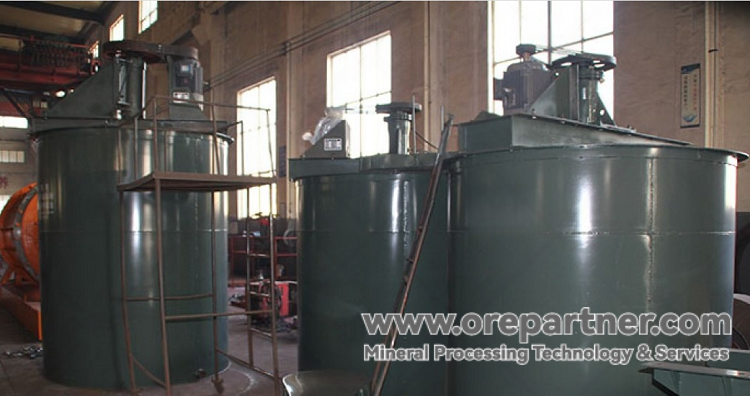
No matter how perfect the process design is, if the equipment selection does not match, the production capacity and recovery rate after startup will be greatly compromised. The core equipment of a gold processing plant includes crushing equipment (jaw crushers, cone crushers, high-pressure grinding rolls), grinding equipment (ball mills, rod mills, cyclones), separation equipment (flotation machines, flotation columns, gravity separation equipment), dewatering equipment (thickeners, filters), and automation control systems.
OrePartner\'s positioning is not simply as an "equipment seller," but as a technical solution provider. Based on slurry characteristics, process requirements, and budget, we perform precise equipment calculations and simulations for clients to avoid the problems of "using a big horse to pull a small cart" or insufficient equipment capacity. Our equipment supply and commissioning services adopt the principle of "technical matching first," providing one-stop support throughout the entire process from equipment selection, manufacturing supervision, logistics and customs clearance, to installation and commissioning, and personnel training.
Screening recommendation: Examine whether the contractor has equipment selection calculation capabilities and whether they are willing to use your ore samples for equipment matching verification. If the contractor simply "sells whatever they have" rather than recommending equipment based on ore characteristics, the risk is extremely high.
Dimension Three: Qualifications and Track Record — Hard Thresholds That Cannot Be Vague
EPC projects for gold processing plants have clear mandatory qualification requirements for contractors. The bidding conditions for formal projects typically include: the design unit must hold Grade A Engineering Design Qualification in the Metallurgical Industry (Metallurgical Mine Engineering), the construction unit must hold Grade 2 or above General Contracting Qualification for Mine Engineering Construction, the project manager must hold a Grade 1 Registered Constructor Certificate in Mining Engineering, and the safety officer must hold a Registered Safety Engineer qualification.
In terms of track record, bidders are typically required to provide project contracts and completion acceptance certificates for similar ore types and similar processing scales in recent years, with project quality meeting acceptable standards.
OrePartner\'s core team has decades of mining industry experience and deeply understands the technical characteristics of gold ore beneficiation and the key risk points in project execution. We adhere to the quality commitment that "all technical solutions are fully verified through testing, and all recommendations are based on the principle of maximizing economic benefits." We invest the most appropriate professional technical resources in each project and establish long-term tracking mechanisms to ensure continuous optimization of technical solutions.
Screening recommendation: Require the contractor to provide verifiable track records of similar projects (key contract pages, acceptance reports), and verify the actual scope they undertook and the achievement of performance indicators. Don\'t be misled by vague statements like "we\'ve worked with a certain large mine."
III. Contract Review: Put "Pitfall-Avoidance Clauses" in Writing
After selecting the right contractor, you must still hold the bottom line on contract terms. The most common disputes in gold processing plant EPC projects are concentrated in three areas: failure to meet production capacity, shrinkage